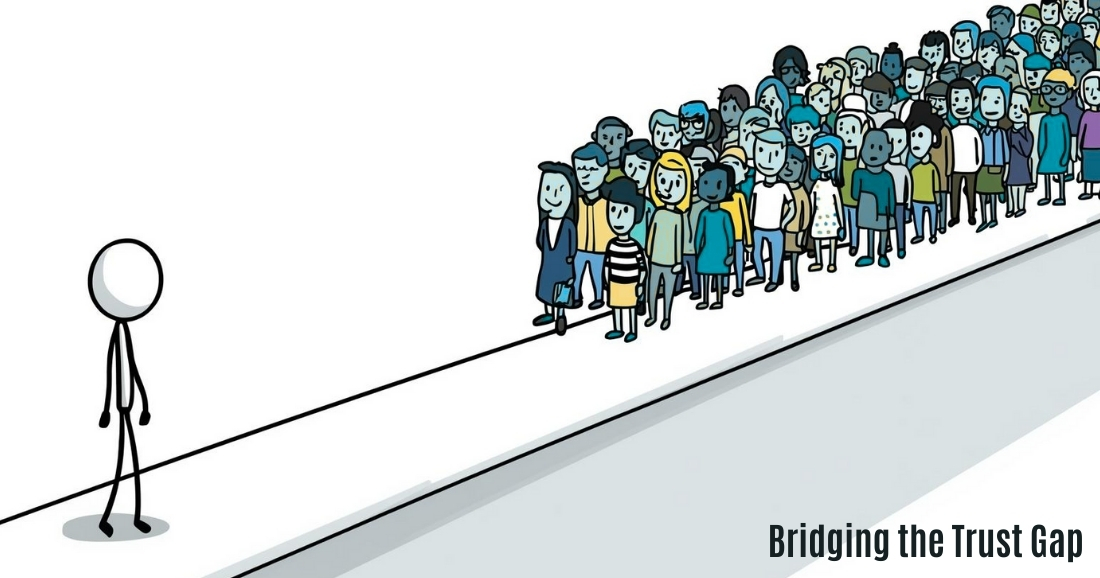

Bridging the Trust Gap:
The Shift Small Business Needs to Make
and Why Trust-First Branding Matters More Than Louder Marketing in 2026
The noise is getting louder.
There are more than 28 million small businesses in the U.S. alone, with roughly 450,000 more starting every month. Layer that on top of big-brand advertising budgets, algorithmic amplification, and the constant pressure to “show up everywhere,” and we are describing a level of marketing noise that never really turns off.
Morning to night. Everywhere we look.
Now add that volume to the growing trust deficit we are living in, where people question what they see, doubt what they read, and assume there is a catch behind every offer or link.
This tension between an increasingly distrustful population and businesses that still need trust in order to survive has created a real problem.
I see it in my own business, and I talk to other small business owners who feel increasingly affected by it as well.
So the question makes sense:
How are we supposed to compete in a world this loud and this skeptical?
The answer is not shouting louder.
It is a shift.
For solopreneurs and small businesses who recognize the growing distrust running through nearly every industry, the path forward is not simply repeating the tactics that used to work, only louder.
Many businesses are doing exactly that.
And it is not working.

The Pattern Most Small Businesses Fall Into
Not that long ago, building trust did not require nearly as much intention.
A few years ago, many small businesses could get by with:
- a simple website
- a basic logo
- a short “about” paragraph
- maybe a sentence or two about what they do
You did not need a polished brand story.
You did not need a clear elevator pitch.
You did not need to think deeply about consistency or recognition.
Just being online signaled legitimacy.
I remember when that was enough. And I see a lot of small businesses still operating from that same assumption today.
The problem is that the environment changed.
What once worked now gets overlooked, lost, or ignored.
So how are most small businesses responding?
More noise.
More offers.
More tactics.
They post more.
They try new platforms.
They tweak messaging.
They seek out new tools and apps.
They spend more money.
They chase whatever trend or tactic seems to be working for someone else.
But when trust is fragile, even the most well-intentioned businesses can end up stuck in a loop.
They do more, try to be louder, change tactics, but end up being trusted less.
This is where the shift actually begins.
The Shift: From Looking Inconsistent and Busy to Looking Established and Solid
(Why branding consistency matters more than ever)
When trust is fragile, people are not evaluating businesses the way they used to.
They are not just asking, “Do I like this?”
They are quietly asking, “Is this real?”
“Is this legitimate?”
“Will this still exist six months from now?”
Many small business owners do not realize how often these questions are being asked, or how quickly they are answered.
And those answers usually come before anyone reads a caption, clicks a link, or books a call.
They come from signals.
In a low-trust environment, consistency has become one of the fastest ways people decide whether something feels established or risky.
Not polished.
Not fancy.
Just consistent.
For a long time, branding was treated mostly as a visual exercise.
Logos.
Colors.
Fonts.
Imagery.
But branding has evolved.
Today, in response to ever-increasing competition and noise, branding includes more than visuals alone.
Voice.
Story.
Messaging.
It is not just about how a brand looks, but how it sounds and how consistently it shows up.
When visuals change constantly, or when a business sounds different every time you encounter it, confusion sets in. Even when a business is legitimate, that confusion triggers the same internal alarms people associate with scams, pop-ups, or short-lived offers.
I catch myself reacting this way too.
If something looks and sounds different every time I encounter it, my brain does not think creative.
It thinks unstable, inconsistent, and not trustworthy.
The shift here is not about aesthetics.
It is about recognition.
Reliability.
Consistency.
Consistent branding tells a quiet story:
- this business is intentional
- this business is stable
- this business is not disappearing tomorrow
That consistency allows familiarity to form, and familiarity is one of the earliest building blocks of trust.
In a crowded, noisy market, people may still be drawn to what is clever at first. But as trust continues to erode, they increasingly turn to what feels steady.
That is why small businesses need to shift toward trust-forward brand building.
Because for marketing to work, there has to be a strong, recognizable foundation underneath it, one people feel comfortable trusting.
The Shift: What Small Businesses Need to Do Differently Now
At this point, the problem should be clear:
The issue is not getting louder.
It is not effort or motivation.
And it is not a lack of marketing tactics.
In a low-trust environment, small businesses cannot rely on isolated improvements anymore.
Better visuals here, more content there, a new platform next month. That approach creates activity, but it does not reliably create trust.
What is missing is a stronger foundation for trust.
Branding used to be a single layer.
Today, trust requires a stack.
That is why I have started calling this elevated, trust-forward approach to brand building a…
Brand Stack.
This is how I think about brand-building now:
Brand vs. Brand Stack
Old (what used to be enough):
Branding was mostly visual. Colors, fonts, logos, and a decent-looking website.
Looking professional was often enough to signal legitimacy.
New (what trust requires now):
Today, trust is built through a Brand Stack.
A Brand Stack is the combination of multiple, reinforcing brand layers working together to reduce skepticism and build confidence, especially in a low-trust environment.
What Makes Up a Brand Stack
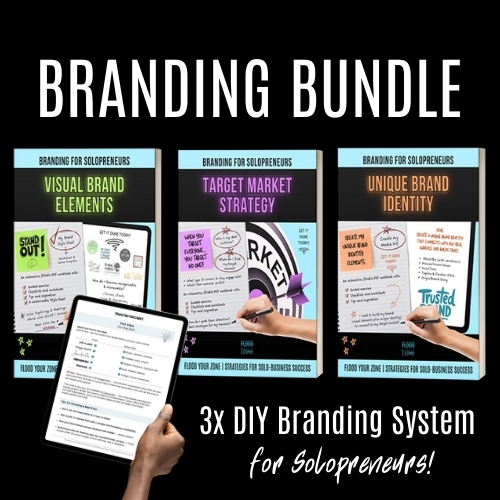
A strong Brand Stack includes three essential layers:
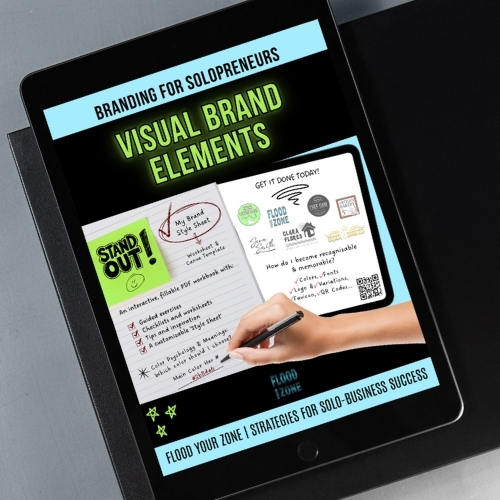
- Visual Consistency
How the brand looks and how consistently it shows up across platforms, touchpoints, and time.
Consistency signals stability. It helps people recognize the brand quickly and feel confident it is legitimate.
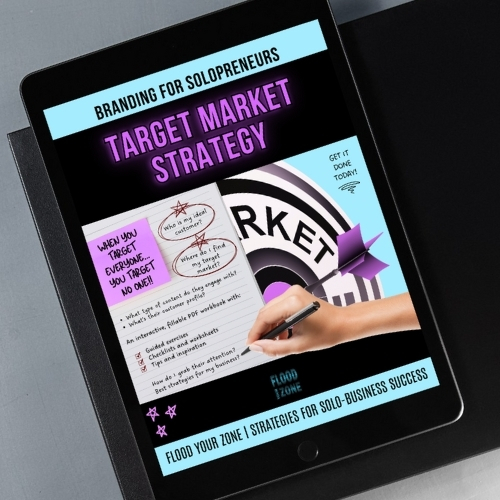
- Target Market Clarity
Who the brand is clearly for and who it is not.
Clear audience focus helps the right people feel recognized instead of marketed at. It replaces broad, desperate messaging with confidence and relevance.
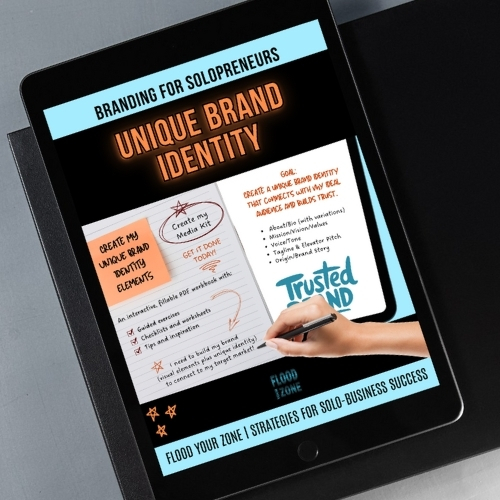
- Unique Brand Identity Elements
How the brand sounds and feels human.
This includes voice, story, background, and proof of realness. These are the signals that show there is a real person or business behind the brand, accessible and accountable.
Why the Brand Stack Matters
When these layers work together, trust does not have to be forced.
People do not need to overanalyze.
They do not need to double-check every signal.
They do not feel like something is “off.”
Marketing stops feeling like persuasion and starts feeling like reinforcement.
That is the shift small businesses need to make in a trust-deficit environment.
Moving from relying on a single layer of branding to intentionally building a Brand Stack that trust can actually rest on.
A quick note:
For solopreneurs and small business owners who want help applying this shift, I’ve created practical tools and workbooks designed to support trust-forward brand building in today’s low-trust environment.
Brand-Building for Solopreneurs - 2026