

Finding Business Opportunities
and the Next Generation of Solopreneurs
There’s a lot of noise right now about AI.
Some people believe it’s going to replace most jobs.
Others say it’s overhyped.
But something real is happening beneath all of that conversation.
People are losing jobs.
Not always because AI has replaced them directly but because companies are using this moment to restructure, cut costs, and eliminate workforce bloat.
And when people lose jobs, something else happens.
They start looking for alternatives.

The Next Wave of Solopreneurs
We’re about to see a new wave of small business formation.
Not necessarily driven by passion projects or lifestyle brands…
…but by necessity.
People asking:
What can I do on my own?
What service is actually needed right now?
Where can I create income without relying on a company?
This is where things get interesting.
Because most people look for business ideas in the same places:
online businesses
content creation
dropshipping
digital products
And while those can work, they are also increasingly crowded.
The Opportunity Most People Overlook
Some of the best opportunities right now are not online trends.
They are local, practical, and often considered “boring”.
They exist where:
demand is increasing
supply is limited
competition is surprisingly low
Think about what happens when:
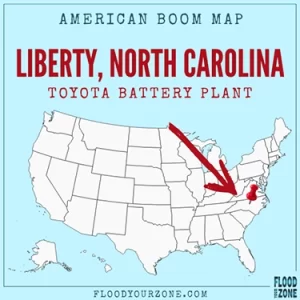
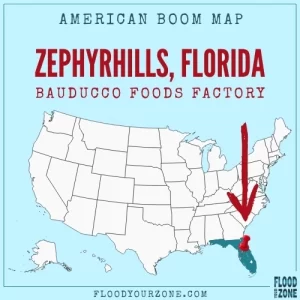
new manufacturing plants are built
distribution centers open
data centers expand
infrastructure grows
These environments create layers of secondary demand, often referred to as ancillary business opportunities.
Not just jobs inside the facility…
…but opportunities around it.
Services.
Support businesses.
Maintenance.
Logistics.
Specialized skills.
Local providers.
A Practical Tool Most People Don’t Use
One of the most useful (and underused) resources for gauging solid business opportunities:
The Occupational Outlook Handbook from the U.S. Bureau of Labor Statistics.
It lets you explore:
fast-growing occupations
projected demand
typical pay
required skills
But more importantly, it can help you see:
Where demand is increasing faster than supply.
That’s where opportunities can be spotted, and can jump start solid market research.
AI Isn’t Replacing Everything
At least not right now.
What AI is doing is:
increasing efficiency
reducing the need for certain roles
shifting how companies operate
And in many cases, it’s being used as a reason to:
streamline teams
cut overhead
remove layers of management bloat
That creates pressure at the corporate level.
But it also creates space at the small business level.
The Real Shift
The shift isn’t just about AI.
It’s about structure.
Large organizations are becoming leaner.
Which means more individuals will need to:
create their own income
build their own systems
serve real needs directly
This is where small business becomes powerful again.
And I argue, small business can save the world!
A Different Way to Think About Opportunity
Instead of asking:
“What online business should I start?”
Try asking:
“What is needed where I am… that isn’t being fully met?”
Look for:
growing regions
expanding industries
underserved services
gaps in local supply
The answers are often much closer than people think.
Where to Actually Find These Opportunities
If you’re starting to think differently about opportunity, the next question becomes:
Where do you actually look?
Here are a few practical places to start.
1. The Occupational Outlook Handbook (BLS)
The Occupational Outlook Handbook from the U.S. Bureau of Labor Statistics is one of the most overlooked tools available.
You can explore:
fastest growing occupations
projected demand
typical pay ranges
required skills
But the real value is in spotting patterns:
Where demand is increasing
Where shortages exist
Where services are needed but not widely offered
Those gaps often translate directly into small business opportunities.
2. Local Growth Signals
Pay attention to what’s happening in your immediate area.
Look for:
new construction
infrastructure projects
distribution or logistics hubs
population growth
These changes create ripple effects (ancillary business opportunities).
More people → more needs
More businesses → more support services
Opportunities often appear around growth, not just inside it.
3. Talk to People Already in the Work
One of the simplest (and most effective) ways to find opportunity:
Ask people.
contractors
service providers
local business owners
Ask questions like:
“What local services or products are in short supply?”
“What local services are most in demand?”
Try to find real local demand, not theoretical ideas.
4. Look for What People Complain About
This sounds simple, but it’s incredibly useful.
Pay attention to:
delays
poor service
lack of availability
inconsistent quality
Every complaint is a signal.
If enough people are frustrated by the same thing, there is likely an opportunity behind it.
5. The Overlooked Opportunity: Existing Businesses
There’s also a quieter shift happening that most people aren’t paying attention to yet.
Many small business owners are approaching retirement.
And a surprising number of them:
don’t have succession plans
don’t have someone to take over
would prefer to transition their business rather than shut it down
This is creating a different kind of opportunity.
Not just starting something new…
…but stepping into something that already exists.
Final Thought
There’s a narrative right now that everything is becoming automated, centralized, and controlled by a few large players.
But at the same time, there’s another reality emerging:
More individuals stepping out on their own.
More local needs.
More gaps to fill.
Small business isn’t disappearing.
It’s evolving.
And for those willing to look beyond the obvious, there are more paths than ever, not just to start something, but to build something that lasts.
Brand-Building for Solopreneurs - 2026